

-
-
Characterization of Growth Potential and Valuable Metabolite Profiles of Indigenous Freshwater Microalgae
토착 담수 미세조류의 생장성 및 유용 대사물 생산 특성 평가
-
Yu Ho Kim, Bok Yeon Jo, Chang Soo Lee, Yong-Soo Choi, Seung Won Nam, Z-Hun Kim
김유호, 조복연, 이창수, 최용수, 남승원, 김지훈
- Microalgae have emerged as promising biological resources owing to their photosynthetic efficiency and capacity to produce diverse high-value metabolites. However, growth performance …
미세조류는 높은 광합성 효율과 함께 고부가가치 대사산물을 생산할 수 있어 생물자원으로서 큰 주목을 받고 있다. 그러나 미세조류의 생장률과 대사산물 조성은 분류군 및 …
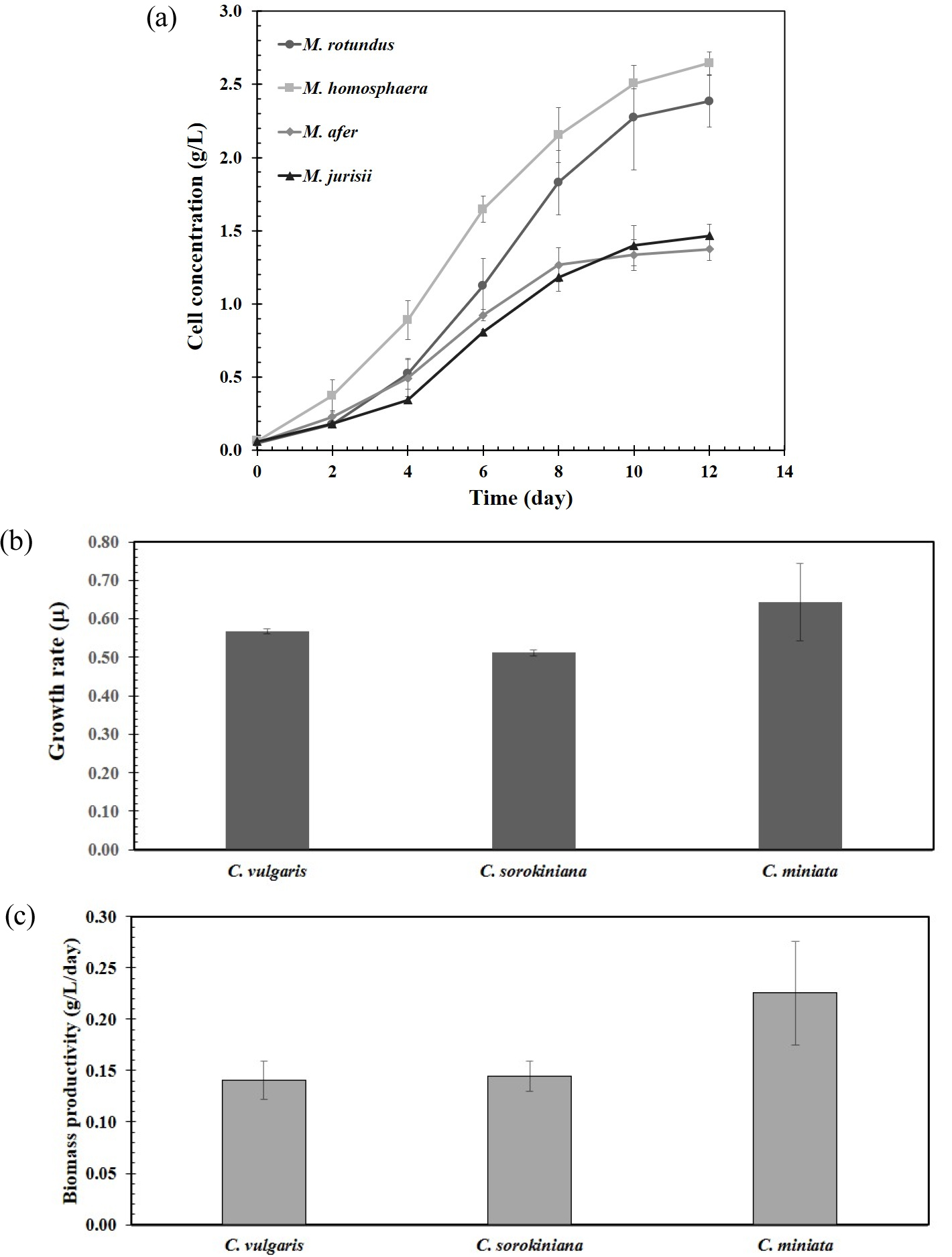
- Microalgae have emerged as promising biological resources owing to their photosynthetic efficiency and capacity to produce diverse high-value metabolites. However, growth performance and biochemical composition vary substantially across taxa and environmental conditions, underscoring the need to evaluate indigenous strains for industrial applications and bioresource sovereignty. In this study, 7 indigenous freshwater species were selected from the Freshwater Bioresources Culture Collection (FBCC, Korea). We comparatively analyzed growth rate, biomass productivity, and high-value metabolites (e.g., carbohydrates, proteins, fatty acids and pigments). The results revealed distinct species-specific metabolic profiles. C. miniata (0.64±0.10/day) and M. homosphaera (0.65±0.01/day) exhibited high growth rates and superior pigment contents, indicating suitability as functional food resources. M. afer showed high carbohydrate content (671.3±105.6 mg/g), indicating strong potential for bioenergy applications. C. sorokiniana showed high protein content (509.9±35.0 mg/g) and a favorable fatty acid profile, supporting its use in pharmaceuticals or nutraceuticals. Also, as metabolite content is influenced by environmental conditions, optimization of culture conditions and nutrient-deficiency studies, such as nitrogen, may enhance the production of metabolite content. These findings provide foundational data for selection and industrially application indigenous freshwater microalgae.
- COLLAPSE
미세조류는 높은 광합성 효율과 함께 고부가가치 대사산물을 생산할 수 있어 생물자원으로서 큰 주목을 받고 있다. 그러나 미세조류의 생장률과 대사산물 조성은 분류군 및 환경 조건에 따라 크게 달라지므로, 산업적 활용과 국내 생물자원 주권 확보를 위해서는 국내 토착 미세조류의 체계적인 평가가 필요하다. 본 연구에서는 담수생물자원은행으로부터 선별한 국내 토착 미세조류 Chlorella 및 Mychonastes를 대상으로, 생장률과 바이오매스 생산성뿐만 아니라 고부가가치 대사산물(탄수화물, 단백질, 지방산 및 색소)을 비교·분석하였다. 그 결과, 종별로 뚜렷한 대사 특성이 확인되었다. C. miniata (0.64±0.10/day)와 M. homosphaera (0.65±0.01/day)는 높은 생장 속도와 우수한 색소 함량을 보여, 기능성 식품 소재로서의 활용 가능성이 높은 것으로 나타났다. M. afer는 높은 탄수화물 함량(671.3±105.6 mg/g)을 나타내어 에너지 식품, 바이오기능성 소재로서의 활용 가능성이 확인되었다. C. sorokiniana는 높은 단백질 함량(509.9±35.0 mg/g)과 우수한 지방산 조성을 보여 의약 또는 건강기능식품 소재로서의 이용 가능성을 시사하였다. 또한, 환경 조건에 따라 대사산물의 축적이 달라지므로, 배양 조건 최적화 및 영양소 결핍과 같은 연구를 통해 특정 산물의 생산성을 향상시킬 수 있을 것으로 여겨진다. 본 연구 결과는 국내 자생 담수 미세조류의 선발과, 향후 산업적 활용을 위한 기초 자료를 제공한다는 점에서 의의가 있다.
-
Characterization of Growth Potential and Valuable Metabolite Profiles of Indigenous Freshwater Microalgae
-
-
Isolation and Culture of Free-living Conchocelis of Pyropia
김 유리사상체(free-living conchocelis)의 확보 및 배양
-
Bo Yeon Kim, Han Gil Choi
김보연, 최한길
- Pyropia species are red algae with a heteromorphic life cycle consisting of a blade gametophyte and a filamentous sporophyte (conchocelis). Free-living conchocelis …
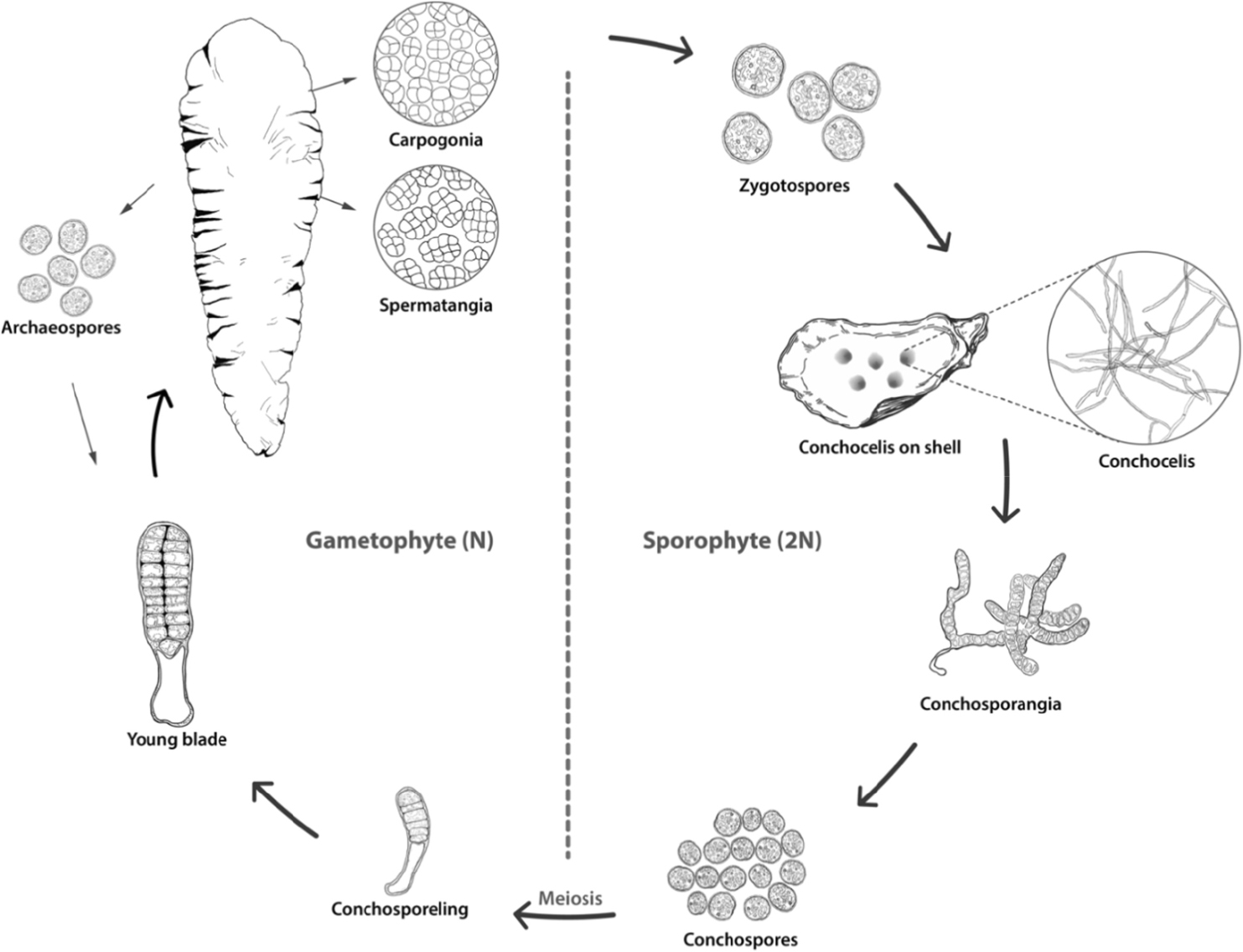
김(Pyropia spp.)은 엽상체 배우체와 사상체 포자체가 교대로 출현하는 이형세대교번 생활사를 갖는 홍조류이다. 유리사상체(free-living conchocelis)는 패각과 같은 탄산칼슘 기질에 잠입하지 않고 액체 …
- Pyropia species are red algae with a heteromorphic life cycle consisting of a blade gametophyte and a filamentous sporophyte (conchocelis). Free-living conchocelis grows freely in liquid culture without penetrating calcareous substrates and can be maintained and propagated for long periods under laboratory conditions. This review summarizes the isolation methods, culture conditions, and applications of free-living conchocelis. It is commonly established from carpospores, and its growth and maturation are regulated by temperature, irradiance, photoperiod, and nutrient availability. Free-living conchocelis has been widely used for germplasm preservation, seed production, breeding programs, and environmental stress studies. Recent advances have expanded its applications to molecular research and the development of high-temperature tolerant cultivars. This review provides fundamental information for the effective utilization of free-living conchocelis in Pyropia research and seed production.
- COLLAPSE
김(Pyropia spp.)은 엽상체 배우체와 사상체 포자체가 교대로 출현하는 이형세대교번 생활사를 갖는 홍조류이다. 유리사상체(free-living conchocelis)는 패각과 같은 탄산칼슘 기질에 잠입하지 않고 액체 배지에서 자유롭게 생장하는 사상체로, 장기간 보존과 대량 증식이 가능하다. 본 논문에서는 유리사상체의 확보 방법, 배양 조건 및 활용 분야를 정리하였다. 유리사상체는 주로 과포자로부터 확보되며, 온도, 광량, 광주기 및 영양염 조건에 따라 생장과 성숙이 조절된다. 또한 유전자원 보존, 종자 생산, 육종 및 환경 스트레스 연구에 활용되고 있으며, 최근에는 분자생물학 연구와 고수온 내성 품종 개발에도 이용되고 있다. 본 논문은 김 유리사상체의 효율적인 활용과 종자 산업 발전을 위한 기초자료를 제공하고자 한다.
-
Isolation and Culture of Free-living Conchocelis of Pyropia
-
-
Current Status and Future Perspectives of Seaweed Utilization in Marine Healing Programs
해양치유 프로그램에서 해조류의 활용 현황과 발전 방향
-
Dea Sung An, Ju Hee Kim, Han Gil Choi
안대성, 김주희, 최한길
- Marine healing (thalassotherapy) is a nature-based health promotion approach that utilizes marine resources, including seawater, marine climate, marine mud, and marine biological …
해양치유는 해수, 해양기후, 해양 진흙 및 해양생물자원 등을 활용하여 건강 증진과 질병 예방을 목적으로 하는 자연 기반 건강관리 방법으로, 최근 웰니스 산업과 …
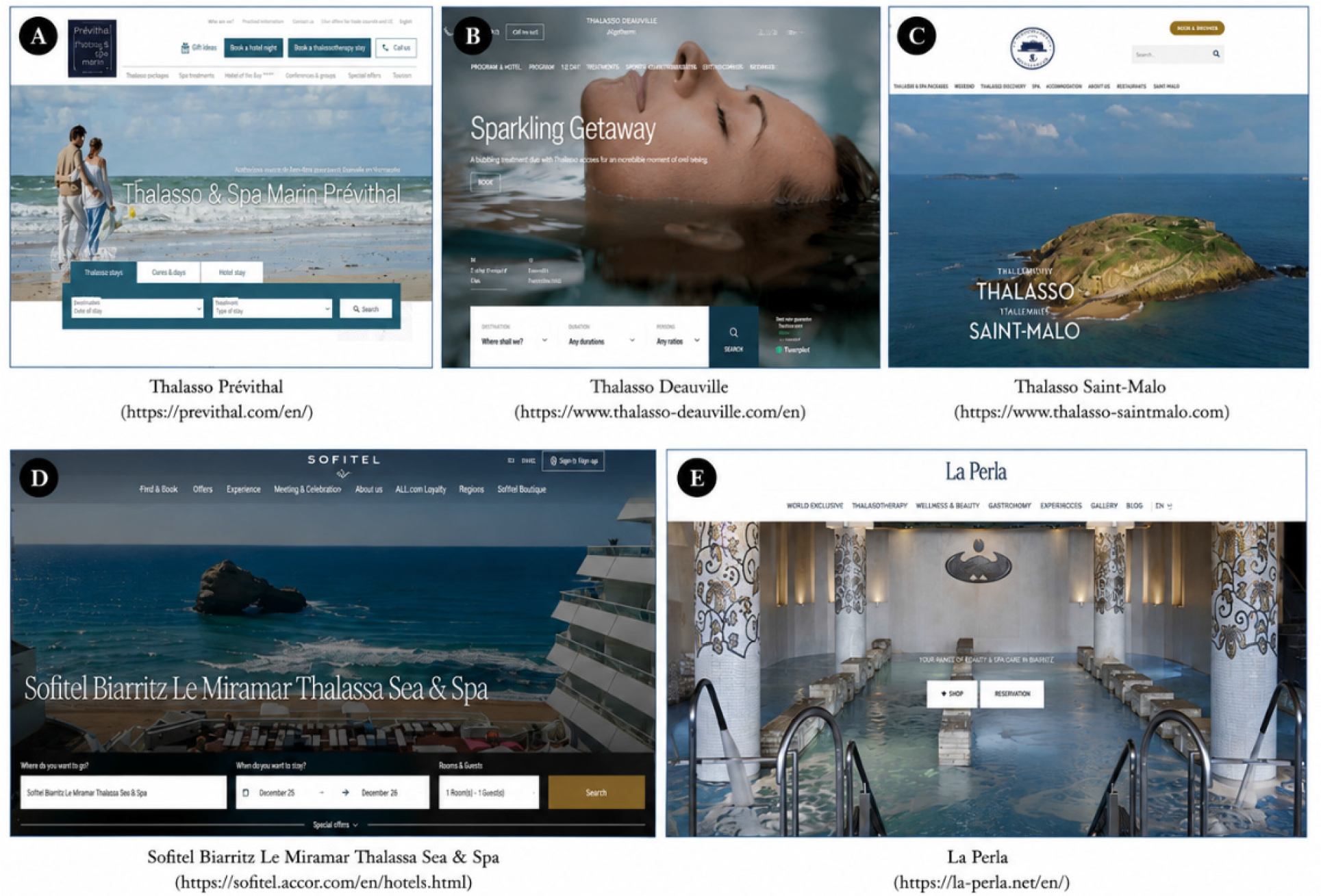
- Marine healing (thalassotherapy) is a nature-based health promotion approach that utilizes marine resources, including seawater, marine climate, marine mud, and marine biological resources, to improve human health and well-being. In recent years, interest in marine healing has increased due to the growth of the wellness and medical tourism industries. This study reviewed domestic and international marine healing practices and summarized the current utilization of marine biological resources, with a particular focus on seaweed-based healing programs. Major European thalassotherapy centers operate various seaweed therapies, including seaweed wrapping, algae facial masks, remineralizing baths, and slimming programs. Brown algae such as Laminaria digitata and Fucus vesiculosus, red algae such as Chondrus crispus, and green algae such as Ulva lactuca are commonly used in these programs. Seaweeds contain a variety of bioactive compounds, including alginate, fucoidan, carrageenan, vitamins, and minerals, which have been reported to exhibit moisturizing, antioxidant, anti-inflammatory, immunomodulatory, and potential wellness-promoting properties. In addition, seaweeds are widely utilized as dietary supplements, cosmetic ingredients, bathing materials, and functional food resources. Korea possesses abundant seaweed resources, including Undaria pinnatifida, Saccharina japonica, Ulva prolifera, and Sargassum species; however, their application in marine healing programs remains limited. Therefore, the development of Korean-style marine healing programs based on the functional properties of native seaweeds is required. Further scientific validation and clinical studies may contribute to the advancement of seaweed-based marine healing industries and the development of high-value-added marine bioresource industries.
- COLLAPSE
해양치유는 해수, 해양기후, 해양 진흙 및 해양생물자원 등을 활용하여 건강 증진과 질병 예방을 목적으로 하는 자연 기반 건강관리 방법으로, 최근 웰니스 산업과 의료관광 산업의 성장과 함께 관심이 증가하고 있다. 본 연구에서는 국내외 해양치유 사례를 조사하고, 해양치유 프로그램에서 활용되는 해양생물자원과 해조류 기반 프로그램의 현황을 정리하였다. 유럽의 주요 해양치유센터에서는 해조류 래핑, 해조류 목욕, 해조류 마스크 및 슬리밍 프로그램 등이 운영되고 있었으며, Laminaria digitata, Fucus vesiculosus, Chondrus crispus 및 Ulva lactuca 등이 주요 소재로 활용되고 있었다. 해조류는 알긴산, 후코이단, 카라기난 및 다양한 미네랄을 함유하고 있어 피부 보습, 항산화, 항염증, 면역조절 및 웰니스 증진 효과가 보고되고 있다. 또한 해조류는 식이요법, 입욕제, 화장품 및 기능성 식품 소재로 활용되고 있어 해양치유 산업의 핵심 생물자원으로 평가된다. 우리나라는 미역, 다시마, 감태 및 모자반류 등 다양한 해조류 자원을 보유하고 있으나, 해조류 기반 해양치유 프로그램의 활용은 아직 제한적인 수준이다. 따라서 국내 자생 해조류의 기능성 성분과 생리활성을 기반으로 한 한국형 해양치유 프로그램 개발이 필요하며, 향후 과학적 검증과 임상 연구를 통해 해조류 기반 해양치유 산업의 활성화와 고부가가치화를 도모할 필요가 있다.
-
Current Status and Future Perspectives of Seaweed Utilization in Marine Healing Programs

 Aquatic Nature




 The Korean Society of Phycology
한국조류학회
A-1716, 72, Iljik-ro, Gwangmyeong-si, Gyeonggi-do, Republic of Korea
Tel: 02-899-5980 / Fax: 02-899-5922 / E-mail: algae@algae.or.kr Copyright© The Korean Society of Phycology. Powered by APUB
Tel: 02-899-5980 / Fax: 02-899-5922 / E-mail: algae@algae.or.kr Copyright© The Korean Society of Phycology. Powered by APUB